The philosophy of Kung Fu
Exlploring the five elements.
The Wu Xing.
As the Chinese observed events, they sought to categorize the types of forces at work in other ways, in order to gain more detailed insight into the outcome of events. They looked about themselves and saw that apart from living creatures, there appeared to be five influences acting upon life. (Parallel approaches can be found among the Greeks, Tibetans and others.) The five forces described are that of Water, Wood, Fire, Earth, Metal. Each of these describe the interplay of energies in the cosmos. In their simplest form, they represent how one event leads to another in a creative cycle and conversely, how events are destructive in cycles also.
Fire.
For Example, the Theory goes that Metal as it cools, forms moisture on its surface, (Water), which when applied to the ground causes things to grow, (Wood), which can be burned to form ash or (Earth), from which one gets minerals, (Metal). One will note that in making the cycle throughout these phases one arrives at the beginning point again. One begins from Metal and arrives at Metal, again indicating the Chinese closed universe approach.
Water.
In their destructive cycle, Fire is destroyed by Water, Water is destroyed by Earth is destroyed by Wood, Wood is destroyed by Fire. In the creative cycle, Metal creates Water, Water creates Wood, Wood creates Fire, Fire creates Earth and Earth creates Metal. Many will remember the game paper, scissors and rock and see the same idea of mutually creative/ destructive cycles and their interplay. For the Chinese the Yin Yang, Ba Qua and Wu Xing Theories are not exclusive of each other. Instead, they are different vantage points from which to view the same event, that of the process of change in the cosmos.
Earth.
The result again was that all life is a cycle of creation and destruction. It is impossible to destroy any single side of the forces of the universe. In fact, in appearing to destroy any part of the cycle, the person taking the action is merely setting in motion the forces that will ensure its eventual return. (From Metal to Metal as in the first example.)
Wood.
In application for the Chinese, what was seen was that a single strongest strategy or position could not exist. Every situation carries within it the seeds of its own destruction. Conversely, every defeat has the opportunity to turn to ascendency if sufficient time, resources and strategy can be brought to bear. The victorious is not always the strongest, (though the Chinese give due respect to strength) instead it is the one who can adapt to the changing circumstance.
Metal.
The ability to utilize the forces present in any situation and thereby create or dissolve targeted outcomes indicates the pinnacle of skill for the Chinese. Ultimately though, every event will be overcome by another, every force will gain ascendency and eventually decline. It is, to the Chinese, neither good nor bad, it is simply the way the universe works. It is the person who understands the flow of change and can adapt with it has the greatest chance of winning, or at the very least, surviving.
The Five Elements gave the Chinese a way of categorizing either an event or the participants in an event and an understanding the result of their interaction. This gave insight that enabled the observer to predict outcomes and plan accordingly. It also prevented the observer from committing to a single course of action regardless of the circumstances.
As useful as this approach is, it’s very focus prevents the observer from seeing other influences on a situation. Behind the interaction of the Five Elements is an energy that surrounds them and can give the observer insight not available in the Five Elements approach. This is not to lessen the importance of the Five Elements; it is indeed an essential tool. But it is to say that it is not the only tool available.
This next tool is called the Tao. Tao means “Way”. The Tao is the interaction between elements in a specific situation. To focus on the Tao is to focus on the nature of the interaction itself and not the participants or the results of their interaction. The energy of the interaction (the Tao of a circumstance or event) cannot be described in words, unlike the Five Elements, which can be described easily. The Tao of an event cannot be logically deduced through reasoning; it must be intuited. The Tao must be taken in by one’s subconscious, unlike the Five Elements which are analyzed by the conscious, rational mind. The Tao, when sensed, comes about as a feeling, not as a thought, and can then be interpreted through the circumstances of an event. The Tao can be accurately sensed only when one does so without considering or judging the elements involved.
Where the Five Elements uses the conscious mind, the Tao is sensed through the subconscious mind. This is an important distinction because where the Five Elements uses the observations of the conscious mind, (the things you notice), the Tao uses the subconscious mind which takes in thousands of sensory inputs from which the conscious mind is largely excluded in order to focus one’s concentration. All of us have had something occur to us as a surprise and yet we find ourselves saying, “I had a feeling that something was about to happen”. This is not magic. It is that our subconscious mind saw what was happening and tried, in its own non-verbal way, to warn us or inform us. In our daily lives we rarely give space to listen to our subconscious. However, soldiers who have been in combat will tell you that they learn to “trust their sixth sense”. Their work requires them to be so sharply aware and in the moment that they come to hear the voice of their subconscious.
The text for one wishing to learn of the Tao is the Tao Te Ching, “The Classic Text on The Tao and It’s Power”. It is written in poetic verse, remember it is to make you look to your feelings and intuition, rather than your logical reasoning. Read, contemplate and, over time, you will find access to this quality which uses more of your brain than your conscious mind. Its non-verbal nature hides its powerful potential. I can recommend only two versions of this text from my own limited experience, one is R.L. Wing “The Tao of Power”, and the other is Lin Yutang, “Tao Te Ching”. Both are rare but worth it. Be wary of other versions, there are indeed other good ones, but there are those that are literally intentional distortions of what Lao Tsu, the author, wished to share. For example, Stephen Mitchel’s version of the Tao Te Ching has been reviewed and it was found, by no less than Oxford Academy, that:
“Mitchell’s version of the Tao Te Ching is not a scholarly faithful translation but rather a spiritual interpretation that is heavily improvised. The importance of this spiritual interpretation lies in the way Mitchell fuses the horizon of Chinese Taoism with his own Zen practice and the English-speaking reader’s horizon of Christianity.”
In other words, you are not getting Lao Tsu’s amazing text that has been around for millennia. Instead, you are getting the author’s personal thoughts clothed as Lao Tsu. So it is that one should check out translations carefully before purchasing one.
Nonetheless in a person’s practice, what does using the Tao look like? I offer the following:
The time is one hundred years ago in China. A Chinese businessman has come home for the day. It is late, already dark, and his children have gone to bed. He walks through his home to the solitude-producing darkness of his green back yard. A servant comes, bringing him a candle. He accepts it and smiles, thanking the servant for the gesture. He sits by the pond at the rear of his home; a small tributary from another person’s property feeds it. The water pauses into the pond for a moment, then goes slowly to another neighbor’s pond behind a small berm.
The servant returns with a tray, having a small pot of tea and an ornate cup. The businessman accepts it with thanks, having arranged his robes where he could sit cross-legged and watch the pond. The servant asks, “May I bring you anything else”? The businessman says quietly, “no, this will be all for the evening”. The servant then departs.
Now the businessman looks at the pond in a relaxed and restful manner. Unseen is the moment he simply remembers a situation of concern in his business dealings. He mentally touches the concern, then opens his mind, sips his tea and watches the pond.
As he sits, impressions come to him. Feelings come upon him, and he experiences them, himself being a part of the experience. After a while he finishes his tea. He then stops and puts his cup down. The servants will take care of it tomorrow. Then he rises, brushes off his robes, walks through the house with the candle and goes to bed, calm, relaxed and ready for sleep. But he now knows exactly what he will do about the concern he brought to the pond.
This is what knowing the Tao is like.
The Tao Philosophy.
The Tao Philosophy.
The Five Elements gave the Chinese a way of categorizing either an event or the participants in an event and an understanding the result of their interaction. This gave insight that enabled the observer to predict outcomes and plan accordingly. It also prevented the observer from committing to a single course of action regardless of the circumstances.
As useful as this approach is, it’s very focus prevents the observer from seeing other influences on a situation. Behind the interaction of the Five Elements is an energy that surrounds them and can give the observer insight not available in the Five Elements approach. This is not to lessen the importance of the Five Elements; it is indeed an essential tool. But it is to say that it is not the only tool available.
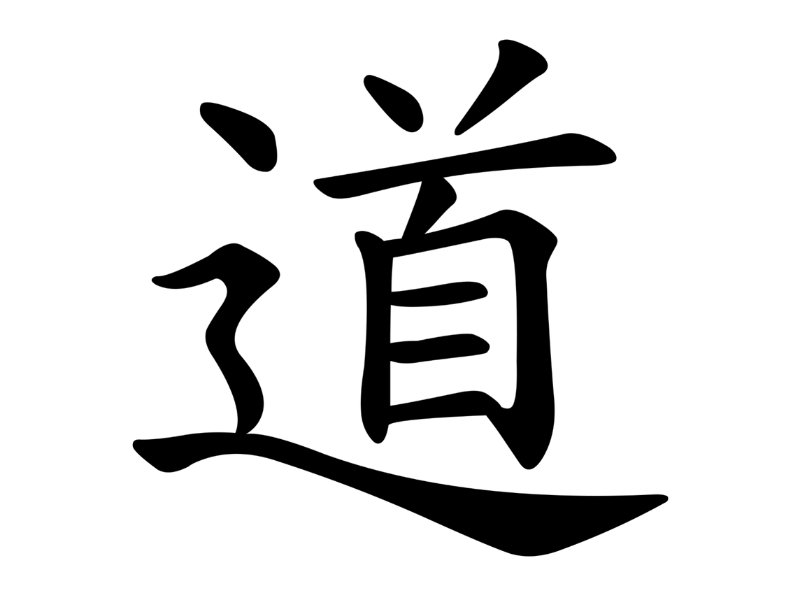
This next tool is called the Tao. Tao means “Way”. The Tao is the interaction between elements in a specific situation. To focus on the Tao is to focus on the nature of the interaction itself and not the participants or the results of their interaction. The energy of the interaction (the Tao of a circumstance or event) cannot be described in words, unlike the Five Elements, which can be described easily. The Tao of an event cannot be logically deduced through reasoning; it must be intuited. The Tao must be taken in by one’s subconscious, unlike the Five Elements which are analyzed by the conscious, rational mind. The Tao, when sensed, comes about as a feeling, not as a thought, and can then be interpreted through the circumstances of an event. The Tao can be accurately sensed only when one does so without considering or judging the elements involved.
Where the Five Elements uses the conscious mind, the Tao is sensed through the subconscious mind. This is an important distinction because where the Five Elements uses the observations of the conscious mind, (the things you notice), the Tao uses the subconscious mind which takes in thousands of sensory inputs from which the conscious mind is largely excluded in order to focus one’s concentration. All of us have had something occur to us as a surprise and yet we find ourselves saying, “I had a feeling that something was about to happen”. This is not magic. It is that our subconscious mind saw what was happening and tried, in its own non-verbal way, to warn us or inform us. In our daily lives we rarely give space to listen to our subconscious. However, soldiers who have been in combat will tell you that they learn to “trust their sixth sense”. Their work requires them to be so sharply aware and in the moment that they come to hear the voice of their subconscious.
The text for one wishing to learn of the Tao is the Tao Te Ching, “The Classic Text on The Tao and It’s Power”. It is written in poetic verse, remember it is to make you look to your feelings and intuition, rather than your logical reasoning. Read, contemplate and, over time, you will find access to this quality which uses more of your brain than your conscious mind. Its non-verbal nature hides its powerful potential. I can recommend only two versions of this text from my own limited experience, one is R.L. Wing “The Tao of Power”, and the other is Lin Yutang, “Tao Te Ching”. Both are rare but worth it. Be wary of other versions, there are indeed other good ones, but there are those that are literally intentional distortions of what Lao Tsu, the author, wished to share. For example, Stephen Mitchel’s version of the Tao Te Ching has been reviewed and it was found, by no less than Oxford Academy, that:
“Mitchell’s version of the Tao Te Ching is not a scholarly faithful translation but rather a spiritual interpretation that is heavily improvised. The importance of this spiritual interpretation lies in the way Mitchell fuses the horizon of Chinese Taoism with his own Zen practice and the English-speaking reader’s horizon of Christianity.”
In other words, you are not getting Lao Tsu’s amazing text that has been around for millennia. Instead, you are getting the author’s personal thoughts clothed as Lao Tsu. So it is that one should check out translations carefully before purchasing one.
Nonetheless in a person’s practice, what does using the Tao look like? I offer the following:
The time is one hundred years ago in China. A Chinese businessman has come home for the day. It is late, already dark, and his children have gone to bed. He walks through his home to the solitude-producing darkness of his green back yard. A servant comes, bringing him a candle. He accepts it and smiles, thanking the servant for the gesture. He sits by the pond at the rear of his home; a small tributary from another person’s property feeds it. The water pauses into the pond for a moment, then goes slowly to another neighbor’s pond behind a small berm.
The servant returns with a tray, having a small pot of tea and an ornate cup. The businessman accepts it with thanks, having arranged his robes where he could sit cross-legged and watch the pond. The servant asks, “May I bring you anything else”? The businessman says quietly, “no, this will be all for the evening”. The servant then departs.
Now the businessman looks at the pond in a relaxed and restful manner. Unseen is the moment he simply remembers a situation of concern in his business dealings. He mentally touches the concern, then opens his mind, sips his tea and watches the pond.
As he sits, impressions come to him. Feelings come upon him, and he experiences them, himself being a part of the experience. After a while he finishes his tea. He then stops and puts his cup down. The servants will take care of it tomorrow. Then he rises, brushes off his robes, walks through the house with the candle and goes to bed, calm, relaxed and ready for sleep. But he now knows exactly what he will do about the concern he brought to the pond.
This is what knowing the Tao is like.
Yin/Yang Tajitu.
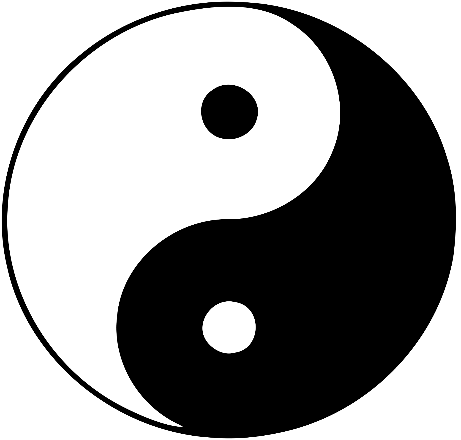
Thousands of years ago, ancient Chinese looked out upon a world filled with spirits, ghosts and unknown influences that shaped the world around them. Survival dictated that they had to come to an understanding of these things or be forever at their mercy. So, they observed events in the world around them. Eventually, they came to the conclusion that their world was composed of opposing forces. Water was the opposite of fire. Night was the opposite of day. Male was the opposite of female. They theorized that all things were formed from the interplay of opposites found in matter and energy. Even humans were the product of the interplay of the Yin and Yang in the energy of Qi, (the vital energy of all life). From this fundamental premise, the Chinese developed high levels of achievement in medicine, engineering, horticulture, chemistry and strategy centuries before Europe. In fact, the previously discussed Five Element Theory, (Wu Xing), is a direct derivative of the Yin/Yang Theory. (Yin/Yang can be found in Chinese characters, (陰陽, Yin/Yang or 阴阳, Yin/Yang, respectively).
Taijitu by Lái Zhīdé来瞿唐, 1525–1604
Today, the concepts of Yin and Yang are common, even in our Western society. The symbol has a brightly colored shape on top (Yang) and a darkly colored shape below, (Yin). The connotation is that there are forces that are easily identifiable, (brightly-colored), above the conflagration of events, (on top). And then there are forces that are not as obvious, (dark colored), and exist beneath the surface of events (positioned below the Yang). Yang is identified as male, possessing strength that is obvious, aggressive or establishing a clearly visible expression of a person, plan, idea or creation. Yin is identified as female, where one’s strength is not visible, recessive, who’s expression in terms of personage, plans, ideas or creations are subtle, not obvious.
To illustrate the difference between the two we shall use martial arts. (Physical representations are the most obvious and definable. After gaining the insight provided, you will find it easy to apply it to more complex and subtle events).
Two combatants face each other. One, upon confrontation, immediately throws a hand strike at his opponent. His opponent blocks. Immediately the attacker grabs the blocking arm, creates superior leverage to overcome the opponent’s strength and throws him to the ground. Here, the attack, (acting first), is Yang. Using the blocking arm as a place to apply leverage (actively taking control), is Yang.
Next, two combatants face each other. One waits for the other to attack (Yin). When he does, the defender grabs the attacking arm and, using the momentum of the opponent’s attack throws him to the ground. Not using one’s own force, (rather, using his force), is Yin.
However, if one looks at the Yin/Yang symbol, there is a light spot in the Yin space, (Yang within Yin) and a dark space within the Yang space, (Yin within Yang). How is it that opposites have the other residing in them? The answer is found by looking at life and not at definitions, just as the Chinese no doubt did centuries ago. Let’s look again at our fighters.
The two combatants face. One jabs at his opponent, (Yang). As they circle, he jabs again and again, (Yang). Finally, after one of the jabs, the defender, who had been evading, charges at the attacker, seeking to catch his opponent as he is withdrawing his arm, (the Yang punch changing into the Yin withdrawing arm). The jabbing fighter was waiting for this. He grabs the charging opponent and, using the other’s momentum, throws him to the ground. The jab was a Yang energy, but within it was Yin, (the energy of the retraction after the punch). This was combined with the opponent’s attacking force to subdue him, (Yin within a Yang technique).
Finally, the two combatants face each other again. Now one waits for the opponent to attack (Yin). Again and again the opponent jabs (Yang) while the other just deflects and escapes (Yin). Finally, the attacker steps again throwing a powerful lead-hand punch. This time the defender does not retreat. Instead, he throws a devastating low-line side kick at the lead knee of the attacker (Yang). Completely committed, the attacker cannot save his leg from having to take the full impact of the kick. His knee folds, and he falls painfully to the ground. (Yang within a Yin strategy).
So it is with the Yin/Yang theory. However, the meanings behind the Yin /Yang symbol does not stop there.
To completely understand, we must take the symbol as a whole, even as the Chinese did so long ago.
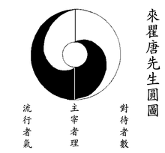
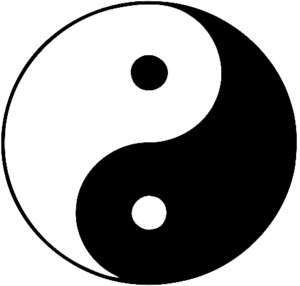
Taijitu by Lái Zhīdé来瞿唐, 1525–1604. The circle in the middle is the Wuji, a topic to be discussed later. You will note that the dots within the spirals are not present. He was not concerned with that aspect in this diagram.
The entire symbol is called the Taijitu, 太極圖. Taiji,太極 actually means “the utmost extreme” and Tu 圖means picture but it can be found in words such as map, Ditu, 地圖, where it means a picture of the earth. So it is that the Taijitu is a picture of the ultimate state of existence; something that is a complete picture of the thing under observation. In such a state the delineation of Yin and Yang are put away. Instead, one considers what exists when these energies are united and become a single entity.
By way of explanation, we shall consider the mind of man. Some say that the Yang of the human mind is Deductive Reasoning, (from specifics to a generalization). For example, I meet five people in a classroom, and they are all English majors. I then assume that the sixth person I will meet will be an English major also.
The Yin of the mind is taken to be Inductive Reasoning, (From generalization to specifics). For example, I am going to a class for English majors, (generalization). I will assume that everyone I meet at this class, will be an English major, (specific).
My personal problem with this example is that it is not a map of the human mind. It is a model only of the rational mind’s Yin/Yang influences. The actual opposite of the rational mind is the intuitive mind. In the complete person, the rational and the intuitive, live united. In Chinese terms this would be living with both the Five Elements and the Tao, the Taijitu. In this model one lives in a world of rational thought that is fully informed by the knowledge of the intuitive mind, a whole person who has learned to utilize all of his resources.
At Authentic Kung-Fu we teach how to approach and use the rational and intuitive parts of the human mind as a unified whole. We have specific steps and training methods to accomplish this task. We would welcome you to join us on this journey.
Study the ancient ways of Kung Fu.
Authentic Kung-Fu isn’t merely a martial arts studio. Many martial arts schools today have become no more than “form schools” where performance of routines is equated with mastery. Our discipline is integrated with a study and appreciation for the philosophies behind the craft. Our endeavor is to foster physical health, mental well being, and character development as well as martial expertise.

Visit Us
2701 Race Street
Fort Worth, Texas 76111
Call Us
(817) 244-2347
Email Us
contact@authentickungfu.com